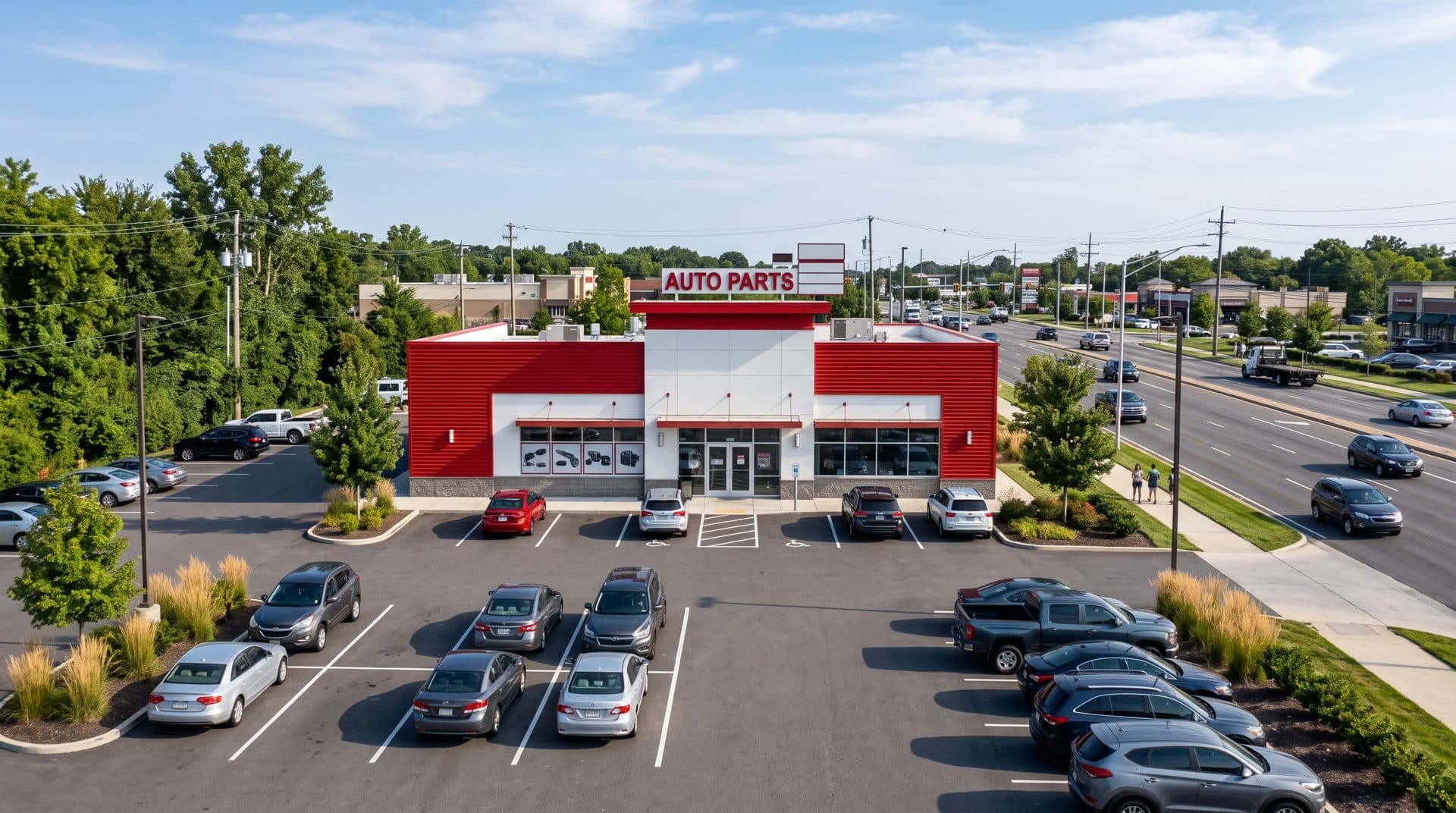
Auto Parts NNN
Net lease properties occupied by national auto parts retailers — recession-resistant demand driven by the aging U.S. vehicle fleet.
Net lease properties occupied by national auto parts retailers — recession-resistant demand driven by the aging U.S. vehicle fleet.
Auto parts retail is one of the most resilient NNN sub-sectors, driven by the aging U.
S. vehicle fleet — now averaging 12.5 years per vehicle. As cars age, demand for replacement parts, maintenance, and service increases, creating a structural tailwind for auto parts retailers regardless of economic cycle. AutoZone, O'Reilly, and NAPA dominate with thousands of locations and strong store-level unit economics. These tenants typically sign 15–20 year absolute NNN leases with rent bumps every 5 years, providing predictable income with built-in growth. Properties are typically 7,000–8,000 SF freestanding buildings on 0.75–1.5 acre pads, with low capex requirements and standardized footprints.
S&P ratings via Hanley Investment Group, Q3 2026.
Auto parts retail benefits from a unique structural advantage: the complexity and urgency of auto repair makes in-store shopping essential. E-commerce penetration in auto parts remains low, far lower than general retail. The DIY market is further insulated by the cost-conscious consumer trend — fixing an older car is dramatically cheaper than buying new. Institutional demand for auto parts NNN is accelerating, and cap rates have compressed over the past year. Investors should focus on properties with 10+ years remaining on the lease, located on high-traffic retail corridors, and occupied by tenants with strong unit-level sales. AutoZone and O'Reilly continue to open new stores aggressively, providing pipeline for new-build NNN opportunities.
Data and analysis on this page are for informational purposes only and do not constitute investment, financial, or tax advice. Statistics may be estimated from publicly available sources and should be verified with primary data providers before use in investment decisions. Tenant information is sourced from public filings and may not reflect current conditions. Past performance does not guarantee future results.