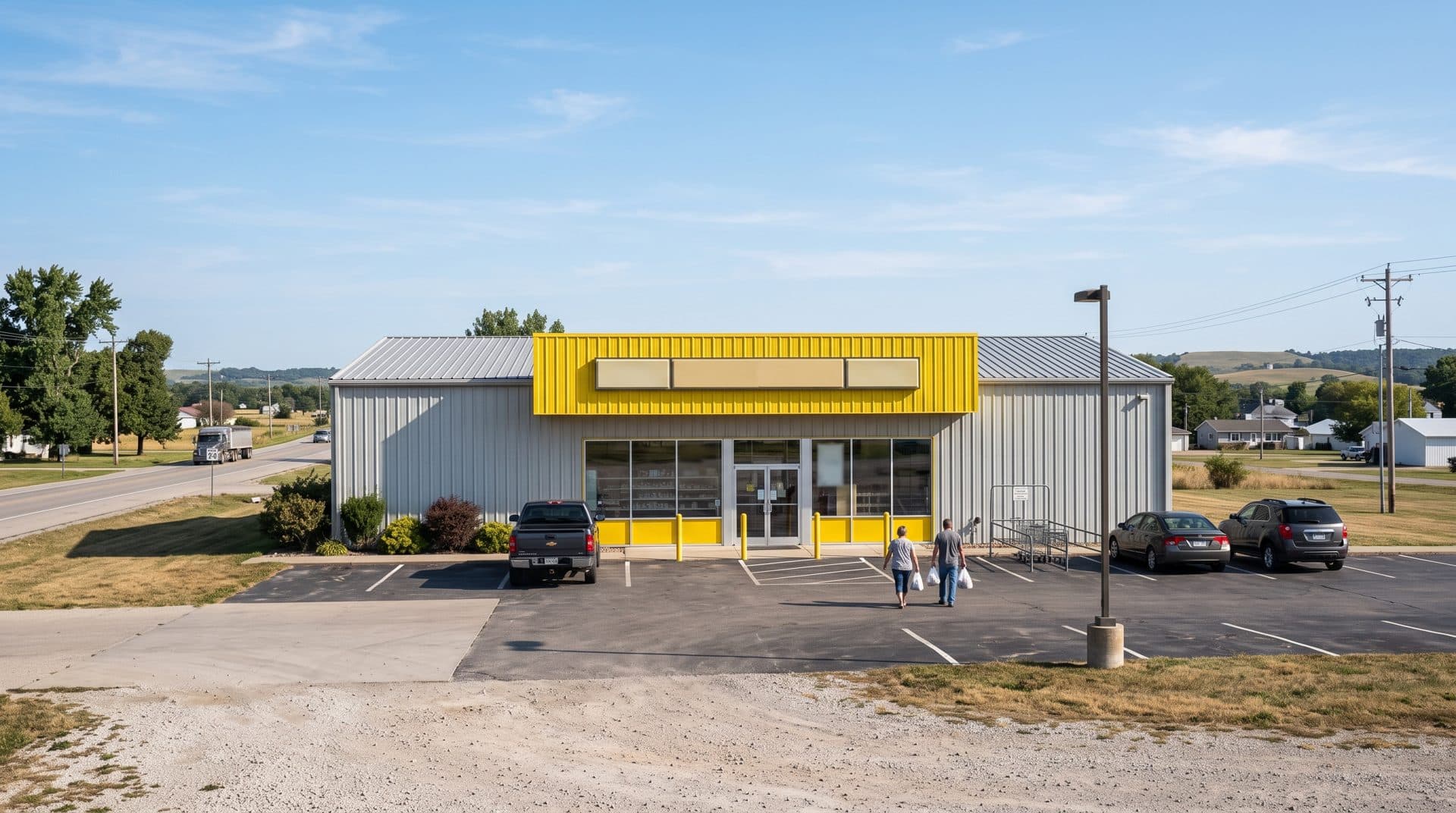
Dollar Store NNN
High-volume NNN transaction activity driven by aggressive store expansion — the most commonly traded net lease property type in America.
High-volume NNN transaction activity driven by aggressive store expansion — the most commonly traded net lease property type in America.
Dollar stores are the most actively traded NNN property type in America, driven by Dollar General's relentless expansion — the chain keeps opening new stores.
Dollar stores are the entry point for many first-time NNN investors and 1031 exchange buyers. Dollar General is the largest operator in the sub-sector. Hanley's Q3 2026 table lists S&P BBB, stable, as of July 1, 2026, and Dollar Tree is also BBB, stable, including the Family Dollar brand. Underwrite the guarantor and the store, not the grade alone. Typical dollar store NNN leases run 15 years with periodic rent bumps every 5 years, on 9,000–10,000 SF prototypical buildings in secondary and tertiary markets. The low price point and high transaction volume make this sub-sector extremely liquid — a well-priced Dollar General can sell in 30–45 days.
S&P ratings via Hanley Investment Group, Q3 2026.
The dollar store sector is bifurcating. Dollar General is BBB, stable, on Hanley's Q3 2026 table as of July 1, 2026. Dollar Tree is BBB, stable, and Family Dollar is one of its brands on that row. Dollar Tree and Family Dollar face store-closure risk, lower per-store revenues, and lingering integration challenges. Dollar General new builds in growing markets remain widely traded, while shorter-term or secondary-market dollar stores need a yield that fits the lease. The sector's high liquidity remains a major advantage — dollar stores are among the easiest NNN assets to buy and sell.
Data and analysis on this page are for informational purposes only and do not constitute investment, financial, or tax advice. Statistics may be estimated from publicly available sources and should be verified with primary data providers before use in investment decisions. Tenant information is sourced from public filings and may not reflect current conditions. Past performance does not guarantee future results.