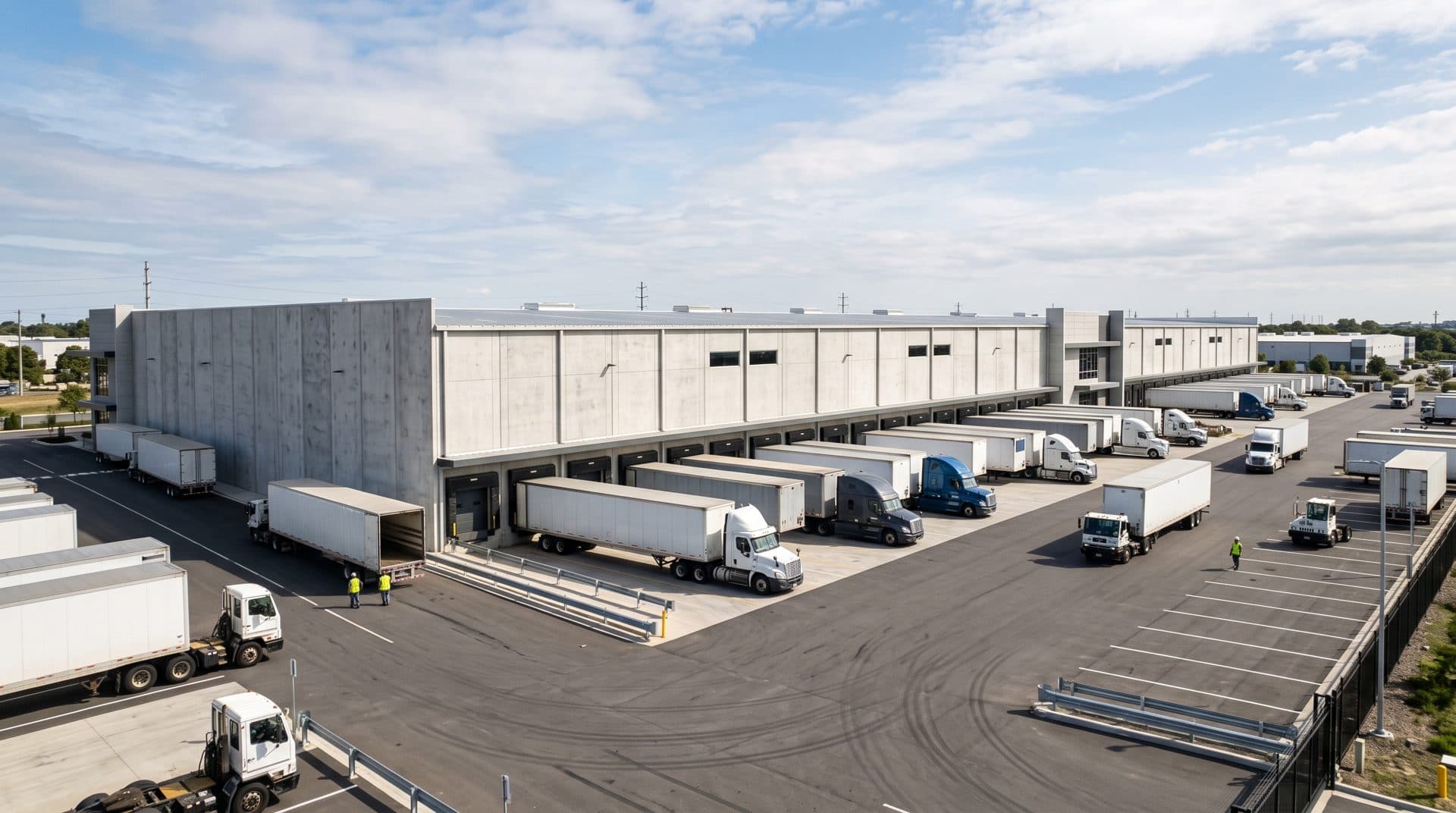
Industrial & Logistics
Last-mile fulfillment and distribution assets leased to tier-one logistics operators with secular growth tailwinds.
Median asking cap rate7.25%↑ +10 bps
Last-mile fulfillment and distribution assets leased to tier-one logistics operators with secular growth tailwinds.
Data as of Q2 2026. Median asking cap rate for single-tenant net lease listings, The Boulder Group, Q2 2026. Asking, not closed.
The industrial and logistics sector has emerged as one of the most compelling investment opportunities in commercial real estate, driven by structural tailwinds from e-commerce adoption and supply chain reconfiguration.
Properties leased to FedEx, Amazon, DHL, and other tier-one logistics providers offer exposure to essential infrastructure supporting the modern supply chain. These facilities-ranging from large fulfillment centers to last-mile distribution hubs-benefit from consistent demand and limited new supply constraints in prime markets. Tenants in this space maintain investment-grade or near-investment-grade credit ratings and demonstrate financial resilience through multiple economic cycles. The sector's characteristics include long lease terms (10-15 years), creditworthy operators, and favorable rent escalation provisions. The Boulder Group's Q2 2026 median asking cap for industrial single-tenant net lease is 7.25%. That print reflects both the quality of tenants and the returns investors are seeking in this asset class.
S&P ratings via Hanley Investment Group, Q3 2026.
The industrial logistics market outlook remains exceptionally positive through 2026 and beyond. E-commerce penetration continues to expand, necessitating additional distribution capacity and fulfillment infrastructure. Urban and suburban markets near population centers are experiencing sustained rental growth, with supply constraints in prime locations limiting new competitive development. Major logistics operators like Amazon are actively consolidating their real estate footprints and securing long-term occupancy agreements, providing stable lease revenue. Capital availability for industrial assets remains robust, with institutional investors and REITs competing aggressively for core holdings. However, select secondary markets are experiencing oversupply in certain warehouse sectors. Investors should prioritize properties with strong tenant credit profiles, located in supply-constrained markets with favorable demographics, and featuring modern specifications suitable for contemporary logistics operations.
Data and analysis on this page are for informational purposes only and do not constitute investment, financial, or tax advice. Statistics may be estimated from publicly available sources and should be verified with primary data providers before use in investment decisions. Tenant information is sourced from public filings and may not reflect current conditions. Past performance does not guarantee future results.