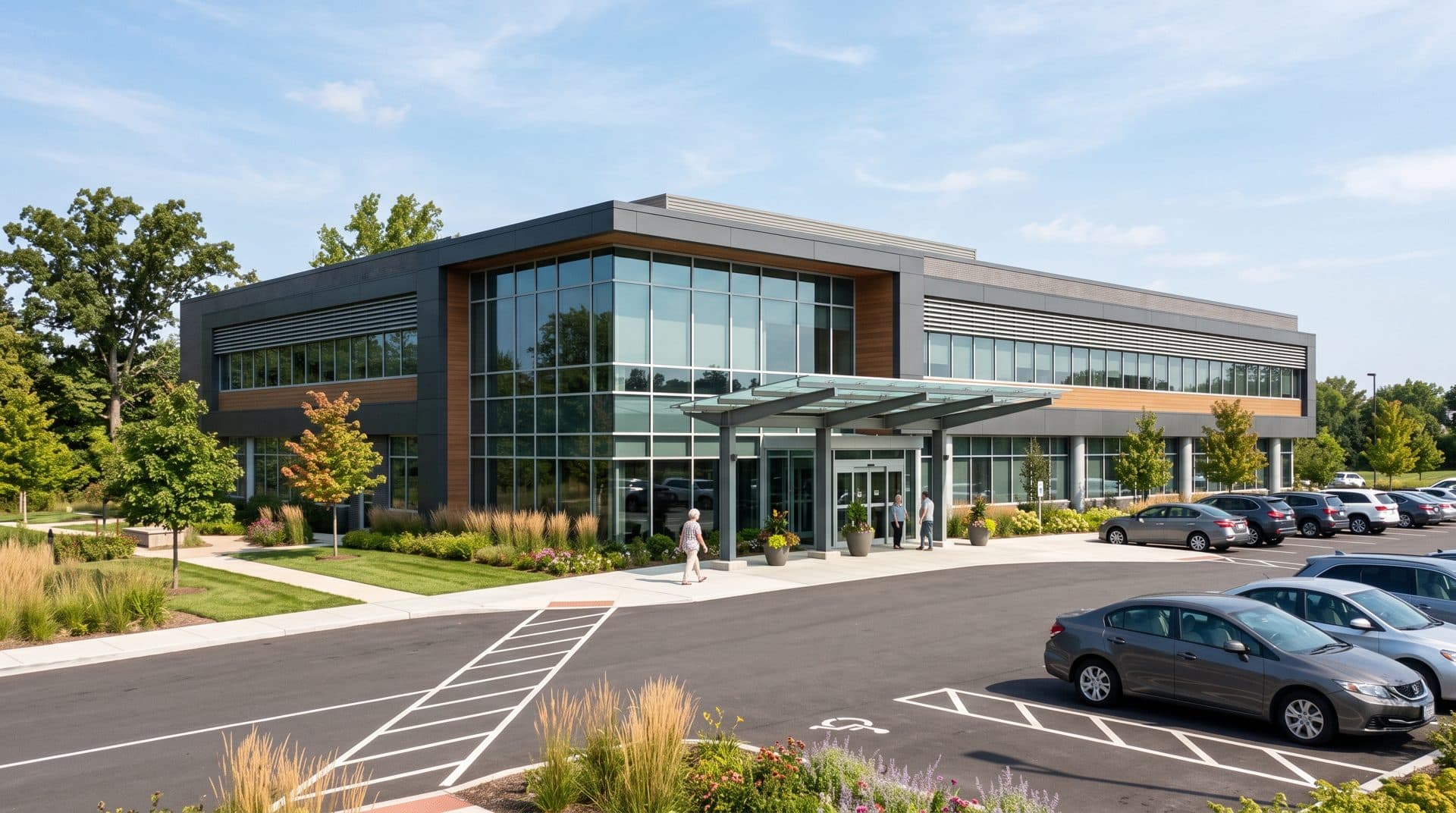
Medical Office
Healthcare facilities anchored by established providers serving essential clinical and diagnostic services.
Tenant creditHanley table↑ Published grades
Healthcare facilities anchored by established providers serving essential clinical and diagnostic services.
Data as of Q2 2026. Median asking cap rate for single-tenant net lease listings, The Boulder Group, Q2 2026. Asking, not closed.
Medical office properties represent a compelling niche within the CRE NNN sector, combining essential healthcare services with favorable structural demand drivers and relatively stable tenant profiles.
Properties leased to dialysis operators like DaVita and Fresenius, along with physicians' practices and diagnostic centers, benefit from aging demographics, chronic disease prevalence, and resilient healthcare spending patterns. These facilities generate revenue streams that are largely insulated from economic cycles, supported by insurance reimbursement mechanisms and essential nature of services. Medical office leases typically span 10-15 years with built-in escalations and tend to feature healthcare operators whose S&P grades are in the Hanley Q3 2026 table. Cap rates for the sector reflect the underlying credit quality and operational stability of established healthcare providers. Modern medical office space with appropriate specifications-including HVAC systems, electrical infrastructure, and accessibility features-commands premium rents and supports long-term occupancy.
S&P ratings via Hanley Investment Group, Q3 2026.
The medical office sector outlook through 2026 is supported by favorable demographic tailwinds and increasing demand for outpatient healthcare services. Aging of the Baby Boomer population is driving utilization of dialysis, urgent care, specialty practices, and diagnostic facilities, supporting revenue growth for anchor tenants. Shift toward outpatient care delivery continues reducing inpatient hospital demand while increasing demand for medical office space. Healthcare providers are consolidating ownership and seeking stable real estate solutions, supporting continued appetite for NNN medical office properties. Rent growth is supported by limited new supply development in many markets and strong tenant demand. Capital flows to medical office remain steady, with institutional investors recognizing the sector's defensive characteristics and income stability.
Data and analysis on this page are for informational purposes only and do not constitute investment, financial, or tax advice. Statistics may be estimated from publicly available sources and should be verified with primary data providers before use in investment decisions. Tenant information is sourced from public filings and may not reflect current conditions. Past performance does not guarantee future results.